Search This Blog

Saturday, 13 September 2014

HTOL and VTOL

Did yu know about terms HTOL and VTOL in relation with aircrafts?

-horizontal take off and landing.
normal aircraft which require some space to land and take off.

-vertical take off and landing.
It doesn't require any space to promote take off as well as landing, helicopter is a good example for this type.

Friday, 12 September 2014

Is it safe to land an aeroplane on water, in case of an emergency ?

--It's not safe under all circumstances.

--.A procedure called ditching is possible under some conditions.

--It's safe to land the crippled plane on water surface.

Which of these statements were correct ?


well the second one is the correct answer, there is a procedure called ditching is readily available in the cockpit in form of an emergency manual to instruct the pilots what to do in an emergency situation, its really a  tough and dangerous  procedure in reality,  keep in mind that always ditch the plane near land surface or near large sea vessels , do not try to ditch the plane against the rough surface of the water such as against waves , the technique is we have to srteamline our aircraft and try to hit the water as slow as possible with all ur possible sources , just like an ordinary landing. for more information and other technical aspects, just ask me.
Am i wrong , well i too a learner, your comments were always welcome friends.. happy learning.

Thursday, 4 September 2014

Principles involving lift of an aircraft

Did you knw which of these principles were applied in relation with lift of an airworthiness aircraft?
--Newtons third law.

--Archimedes buoyancy principle.

Which of these statements were correct ?


Ok, both of these principles were essential for any airplane to stay fit to fly. For a steady flight  we have to equal the four aerodynamic forces exerted on aircraft, say thrust, drag , lift and weight of an aircraft.
that's how archimedes principle helps us to equal the weight and lift, and of course we all know the newtons third law, consider the remaining two aerodynamic forces, ACTION= THRUST therefore REACTION=DRAG, simple isin't it  ?
The second image shows a special aerofoil shape gives us the required pressure difference around the wings to achieve more lift.

Am i wrong, well i've completed aeronautics back in 2010, so may be i've forgotten somethings, i too a learner, your suggestions were always welcome friends, happy learning !


Wednesday, 3 September 2014

Is there any safest seat available on aircraft ?

Did you knw which was the safest seat on aircraft ?
--On wings near emergency exit
--Aile seat of fin region near rear exit.
--There isn't such safest seats so far.
Which of these satements were correct ?


Ok, you might think that the second one was the answer, but in reality isn't , the third one is the correct answer, there isn't a safest seat on any aircraft, but the chance of survival may vary depending upon seats we chose , technically seats on mid section of airplanes were strong in construction, where bulkheads were reinforced more strong enogh to withstand the weight of wings and its huge turbo engines, but it also contains large quantity of jet grade fuels, which eventually diminishes the rate of survival during crash.
Ok for me i'll chose the aile seat of fin region near rear exit, because the pilot tries his best to keep the nose up to generte some lift even if it goes wrong and crash, the seats and things before me sustains the impact leaving myself less injured than others, i hope i 'll covered my head like u all know the brace impact position, then also it gives me the confidence that i was near the exit, and also away from the burning jet fuel, also for any air crash, the least damage portion is the fin region ,thats why black boxes were always located in that area because of this fact.

Anyhow keep in mind that do not panic, whatever happens
Try to locate the distance between nearest exit and your seat by means of counting 
Once you got out of plane, never ever attempt to reenter again for any reason


Am i wrong, may be , i too a learner, suggestions were always welcome friends , happy learning !..


Tuesday, 2 September 2014

RAT - RAM AIR TURBINE

Did you know the term RAT in relation with large airliners ?

-- 2 out of 10 Food poisons incident reported due to RAT contamination in large airliners.

--An emergency tertiary equipment used to generate some power to vital equipments also to get some thrust (forward force).

Which of these statements were correct ?


Ok the second one was the correct answer, RAT- Ram Air Turbine - a tertiary emergency fan deployed from beneath the belly of aircraft  in between two large wings , used to generate some power, in case if all  engines flame out occurs , it also generates some forward force and it also gives some lift and control based on atmospheric air speed, temperature etc.,
Am i wrong, may be, i too a learner, suggestions were always welcome friends, happy learning!


Monday, 1 September 2014

Every pilot's nightmare , When an emergency escalates

Did you know a triple pan call PAN- PAN- PAN

Did you know a mayday call MAY DAY - MAY DAY

These are calls made by the crew during emergency situation, a triple pan call is a first degree emergency call, eg,a single engine flameout in a dual engine aircraft, the controller gives priority to that a/c in order to ground that safely as soon as possible.

On the other hand, a may day call is a real threat for all, eg, all engine flameout or an aircraft is losing hydraulics which makes it uncrollable , burbling or stall situations, etc.,


Aircraft with an additional landing gear

Did you know which aircraft has an extra special landing gear apart from the conventional tandem landing gear,

--mcdonnell douglas dc series.

--Concorde.

The interesting fact is both aircrafts have killed more number of air passengers than other carriers.

Ok, the answer is none other but the first and last ever supersonic passenger airline the concorde, it has an additional special landing gear under his fin region just to prevent skidding .
Am i wrong , well i'm just a learner, suggestions were always welcome, happy learning !

Do airplanes have a reverse gear ?

Did you knw why airplanes are push back to runways using a towing equipment ,

--because they didnt have a reverse gear mechanism.

--because they didnt have a rear view mirror.

which of these statements were correct ?
ok, the answer looks weird, the second one is the correct answer, most of the jet airliners can move backwards without any equipment, by means of a thrust reversal mechanism, dont go deep on that ok, 
Because of the large body of aircraft, there may be intrusions, collisions takes place, so inorder to avoid that each and every aircrafts on apron were totally under the control of that particulat ATC's ground control unit.

Am i wrong, may be i'm just a learner, suggestions were always welcome, via Facebook -https://www.facebook.com/profile.php?id=100005288525518 

Sunday, 16 December 2012

WATER RISERS


                       WATER RISERS

HYDRANT SYSTEM

A network of pipes is fixed near hazardous places in industries, in order to extinguish the fire in case of emergency. This system consists of pipes made of cast iron, steel, Al alloy etc.,

These pumps were always connected to a reservoir.

Hoses and fittings are kept near the hydrants for immediate use when an emergency escalates.

Three types of hydrants are there known as ball type (failure model), screw down type hydrant (high efficiency) and sluice valve hydrant (high efficiency)

Proper maintenance & routine inspection is required to make them work perfect in an emergency situation.

RISERS

A water pipe line is given vertically and routed inside the building or along with the building.

The outlets of pipes are fixed at various levels inside the building, and these outlet pipe junctions are connected by hoses, couplings and nozzles.

There are two types of risers, dry riser system ie. Water is charged when necessary!

Wet riser system i.e. Water is charged forever, under pressure.

TYPES OF ACCIDENTS IN INDUSTRIES BASED UPON INDIAN FACTORIES ACT


TYPES OF ACCIDENTS IN INDUSTRIES
BASED UPON INDIAN FACTORIES ACT

FIRST AID ACCIDENT

The worker has to report within 48 hours!

REPORTABLE ACCIDENT

The worker hasn’t come & report within 48 hours ie. He takes rest more than 48 hours.
It should be reported to supervisor and form18 is prepared for that worker & being sent to the 
Chief inspector of factories.

FORM 18-b

If the worker hasn’t come within 21 days of accident, 18-b is sent to the chief inspector of factories.

If the worker has joined after this means, joint report form should be sent to chief inspector of factories.

If the worker died after sending form18-b means , while sending the second form , in the medical report column , indicate that he is DEAD and then sent to CIF. This is the final one to be viewed by CIF, which means he closes the file.

FATAL ACCIDENT (SPOT DEAD)

Immediately report to CIF & local inspector of factory by phone and send the form 18b to the CIF within two or three days.

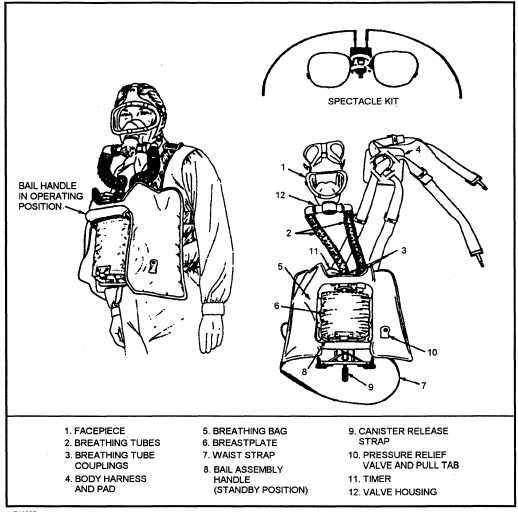
SELF CONTAINED BREATHING APPARATUS


SELF CONTAINED BREATHING APPARATUS

In air, the overall content of oxygen is 21% and from this only 18% of oxygen is required for breathing. The oxygen meter is used to determine the % of oxygen in vessels or tanks or any confined area where risk lies, as those contains poisons, irritants, asphiants (increase of certain gases which leads to the decrease of oxygen)etc.,

Where oxygen content is very low, SCBA is required for normal breathing (but not applicable in fire intended areas.)

SCBA sizes vary according to durations like 15minutes, 30minutes, 45minutes, or 1 hour. A warning whistle is provided in SCBA, in case if the oxygen is at lower level, it blows automatically in order to ensure the safety of the wearer.

ROLE OF SAFETY OFFICER


            ROLE OF SAFETY OFFICER

Accident preventive measures to be taken by safety officer

Responsible for providing training & education to workers

To ensure the supply of correct PPE’S

Following statutory rules

Responsible for investigating accidents & enabling suitable safety measures/ suggestions

Accident reporting to chief inspector of factory (form 18,18b)

coordinating testing of equipments

organizing safety committee meetings

conducting periodic mock drills 

preparation of emergency plan

coordinating for conducting safety audit

conducting safety functions

practicing regular safety inspection

maintaining safety register etc.,

FIRE PUMPS AND PRIMERS


           FIRE PUMPS AND PRIMERS

Pumps are machines driven by an external power to provide energy (force) to fluids. There are three types’ namely positive displacement pumps, negative displacement pumps or centrifugal pumps and ejector pumps.

Example for positive displacement pumps are force pumps, lift pumps, bucket and plunger pumps, rotary pumps etc.,

SIMPLE FUNCTION OF A FORCE PUMP

A solid piston or plunger which moves within a cylinder up & down by means of push pull actions. As a result it creates a suction stroke, which is used to lift the water from ground level.

 An inlet valve and outlet valve is fixed along with the cylinder and when piston moves upward, inlet valve opens & outlet valve is closed similarly when piston moves downward, inlet valve closed & outlet valve opens.

NEGATIVE DISPLACEMENT PUMPS OR CENTRIFUGAL PUMPS

Examples for centrifugal pumps are single stage centrifugal pumps, two stage centrifugal pumps, multi-stage centrifugal pumps.

It consists of two main parts, the impeller & the casing. Impeller provides a high velocity to the water / fluids whereas the casing transforms these velocities in to pressure energy.

Casing inner walls contains guide vanes which is used to reduce the turbulence and also known as the guide rings or diffuser.

ADVANTAGES OF CENTRIFUGAL PUMPS

Moving parts are very less, therefore wear /tear is less.

It ensures continues flow of water.

It construction was very simple

           DISADVANTAGES OF CENTRIFUGAL PUMPS

Priming is necessary, they are not self-priming.

Two stage centrifugal means two impellers mounted on one shaft with extended guide vanes.

EJECTOR PUMPS – ADVANTAGES

No moving parts, therefore no wear / tear loss.

Light weight, easy to handle.

Low maintenance is required.

They can be used in anywhere.

PRIMERS

The primers is a separate device provided either manually or automatically , depending upon the type of centrifugal pump, and it is used to eliminate the air from suction hose and pump casing.

FIRE PROTECTIVE CLOTHING


            FIRE PROTECTIVE CLOTHING

Three types are there known as approach suit, proximity suit and entry suit.

MANUFACTURING DETAILS

It was mainly produced from galvanized aluminum fabric with five layers of protection which includes layer of aluminum by vapor deposit process, protective film, another layer of aluminum, heat stable adhesive along with base fabrics.

It was also lined with leather with proper insulations as inner lining, fire hoods are manufactured with fire retardant plastic and the face side is covered with two pieces of brass mesh.

Properly insulated gloves made up of asbestos.

Shoes with leather lining and insulated soles with a layer of asbestos, in order to retard heat. 

DETECTORS


                                                     DETECTORS

Fire detectors are designed to detect the characteristics of fire such as the smoke, heat and radiation (flame)

A combination of different types of detectors enables more safety, heat detectors are classified in to two types known as point type and line type.

Point type detectors respond to temperature of the gases, in the vicinity of a single point.

Line type detectors respond in the vicinity of a line.

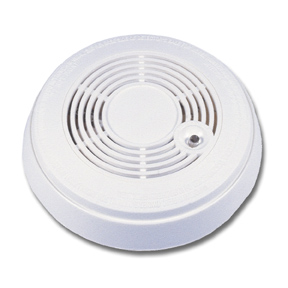
SMOKE DETECTORS

Two types - known as the ionization chamber smoke detectors and optical type smoke detectors.

The principle of ionization chamber smoke detector is “electric current flowing between electrodes in an ionization chamber is reduced when smoke particle enters the chamber”

Optical type smoke detector operates by deflecting the absorption of light by smoke particles.

FLAME DETECTORS

Which includes ultraviolet- infrared detectors !


AIRLINE RESPIRATOR


                  AIRLINE RESPIRATOR

It was widely used in industries where oxygen content is low such as a confined area, vessel, tank etc., the apparatus includes the face mask, air blower and air hose.

The blower fixed area must be free from dust particles; it ensures continues supply of oxygen to the wearer.

The air hose is covered by means of a steel guard in order to protect the hose from puncture and also available in longer lengths to cover distant areas.


ACCIDENT INVESTIGATION IN INDUSTRIES


ACCIDENT INVESTIGATION IN INDUSTRIES

It was a duty of safety officer

Immediately done after accident

To avoid re-occurrence

Safety officer has the right to enquire anybody regarding accident
The investigation report should be submitted to occupier (owner of company)

The report should contain the details of accident, cause of accident and the remedial measures to minimize the re-occurrence

Implementation of safety measures is very important

This report is very confidential


Thursday, 13 December 2012


Cutting Safety
Ø Using Gas Cylinders like Oxygen, Acetylene, LPG
Ø Color coding is important , three separate colors should be used in hoses for identification purpose
Ø Leaky cylinders should not be used
Ø Do not place cylinders under direct exposure of sunlight
Ø Do not use magnetic cranes to lift the cylinders- Use appropriate trolleys for transportation
Ø Cutting torch should be ignited by means of spark lighter, do not use match box
                                                     PPE’S
ü Cutting Goggles
ü Leather Gloves
ü Leather Aprons
Additional Safety Requirements
ü An important hazard in cutting is known as the “Back Fire” It was mainly due to leaks in hoses. “Flash Back Arrestor” must be used to avoid it, it is a non return valve and it avoids returning of flames which was caused by back fire.
ü A choke In cutter point may also induce Back fire in some cases
ü Place proper fire extinguishers !

                                 HAPPY LEARNING 


Welding / Cutting Safety
·       Welding- Joining of two metals

·       Types- Arc welding, Gas welding, Tic welding , Mig welding.

·       Arc Welding Requirements:

Ø Welding Machine- Electrical Energy Is Converted In To Heat

Ø Welding Cable    
 
Ø Welding Holder

Ø Qualified Welder

Ø Return Earth Cable

Ø Proper PPE’S

Ø Welding socket must be made from  backlite material
Ø Separate Supply point must be provided for welding
Ø Welding machines should not be placed in wet areas
Ø There should be no joints in between welding cables
Ø A helper may be engaged during process for best safety considerations
 PPE’S
ü Welding Shield
ü Pure Rubber Shoe
ü Leather Gloves
ü Leather Apron
ü Goggles
 Additional safety requirements
ü Do not do weld in wet areas or a nearby source of flammable thinners , paints, etc.,
ü Earth Leakage Circuit Breaker Must be provided(to trip the current in case of emergency)
ü Earth Return Cable should be directly routed in to the welding machine .

Wednesday, 12 December 2012

Safety In Hand Tools

Ø  Hand tools are widely used in industries.

Reasons For Accidents Due To Hand Tools
Ø Use of wrong tools.
Ø Incorrect method of using tool.
Ø Usage of damaged tools.
Ø Lack of job knowledge.

ü The above reasons were corrected by means of routine inspection , education and training programs etc.,

·        Chisels defect- Mushroomed OR Chipped Head, It should not be used !
·        Generally Tools are classified in to two types , Manually operated and power operated .
·        Power operated tools possess an additional hazard of electricity!
·        When using any power operated tools, check for proper earthing , Check for damaged wires
·         There should not be any joints in between wires , if there insulate it properly!
·        Separate holders must be provided for industrial purposes.
·        ELCB is provided !
 {Happy learning }